In the 15th century, there was a common social phenomenon known as the “garden hermit.” The premise was simple. The nobles would provide housing, meals, and a small stipend to a hermit to live in their garden in a secluded shelter. Aside from the occasional visitor seeking a tidbit of wisdom, the garden hermit would be left alone, and the noble got the accolade of having a real hermit living in their garden, as well as a convenient source of knowledge to draw from.
The various ways in which people can seek and find community are astounding, even if it isn’t particularly surprising. Humanity evolved with sociality at its core. Therefore, it can be disheartening when, whether mental or physical, our disabilities affect our ability to socially engage. Community, even those tailored specifically to our needs, can be difficult to access. The question then is, how does someone combat the isolation that can come with being disabled?
Understanding your needs with disabled loneliness
Isolation and loneliness are intense feelings that can often scramble our brains and thought processes. When we are alone with our thoughts, especially for those with mental illnesses, our heads can be really scary places. Some people may believe that they need a certain type of sociality, end up making well-intentioned but misguided attempts at socialisation. At the worst, they may even seek out social interaction with people that aren’t a good fit. I know that before my neurodivergence was diagnosed, I often thought of myself as, and I quote, “God’s Great Mistake.” Something that wasn’t supposed to exist and had no place in the world; simply because I didn’t feel like I “worked” the way the world did.
It never occurred to me that the first thing that had to change wasn’t just being diagnosed, but understanding myself. I wasn’t broken; I wasn’t some kind of cosmic mistake. My brain was different, and needed (well, needs) different things to most people’s brains.
And really, this is the first step in understanding anything about how we relate to the world. After all, being social isn’t just being in the same room as someone else, it’s engaging with that person. How can you engage in something you feel fundamentally separated from? You understand yourself first, then you find others like you.
Sociality is more than being around others. It’s an interpersonal connection, and with its foundation in a shared interest or concern. Therefore, the first step in combating your sense of loneliness is to understand what kind of a partnership you’re looking for, and then tailor your search to that.
Finding connection on social media
Social media is the obvious one here, and it’s worth a mention just due to the sheer amount of social media platforms that are available nowadays. Where once the online social landscape was dominated almost entirely by Myspace (what a blast from the past right?), now we have Facebook, Instagram, YouTube, Cara, BlueSky, and quite literally millions of online community forums around and pretty much every interest you could be searching for.
Personally, I’m quite introverted and I love that about myself. I guard my introversion as a sacred space within myself. But I’m far from a full-fledged hermit. My oldest friend is someone with whom I share a deeply connected bond, however we only message each other once every couple months, and see each other once every few years. What keeps the friendship and love alive? Matching interests, mutual understanding of availability, and above all else – memes.
Community events
While there are communities like Belong that focus exclusively on the disabled community and hosting events specifically geared towards them, there are usually events within the community that cater to people with disabilities in one way or another. And while it can be exhausting to go through the process of going out just to arrive somewhere and find that it’s not all accessible, sometimes just leaving the house can be enough to give you that little extra mood boost you need to get through the week.
Most councils run regular or semi-regular community events, like art exhibitions, festivals, or markets, such as the South Melbourne Market, the Melbourne Show, the Whittlesea Show, St Andrew’s Market, as well as other countless community events held by venues and communities such as poetry readings, comedy nights, and trivia nights. There are even online community gatherings like Belong’s Arts and Crafts group, or the ND meet up. It’s also common to see people giving TED-talk like lectures on all kinds of topics. And while we can all agree that most venues’ disability access is lacking or poorly thought out, there are some really good venues out there that just hit the nail on the head. And granted, while these events may not always be strictly geared towards socialising, there’s no harm in going and just investing some time in your community. It’s as much as feeling involved in your wider social circle, as it is about more acute 1-to-1 social interactions.
The disability community is out there: and there are disabled-led spaces you can join
Belong is run for and by people with disabilities. It is one of a few different community organisations that aims to build both a digital and physical space for disabled people to come together, make friends, and interact on a variety of interests without the pressure of social judgement. A targeted, curated space where people can rest assured that they’re among people that just get it.
There are other organisations like Belong too. People with Disability Australia is a disabled advocacy group, Women with Disabilities Australia (and their Victorian branch) is a similar group but with a focus on supporting women and girls in a safe, inclusive environment, Inclusive Rainbow Voices is an LGBTQI+ friendly disability advocacy group, and Schizy Inc is a mental health advocacy group with a focus on the arts.
Personally, I’ve had a lot of good chats with folks of a similar mind through Belong’s multiple chat channels, specifically “Joy” where we talk about random stuff that makes us happy, our Books and Reading group, Film group, Arts and Crafts group, and LGBTQI+ group.
Engaging in these communities is often easiest because they have both an online space where people can talk about whatever is going on in their lives, and regular community events where the organisation takes accessibility and the pressures of disability into account when organising.
In short, it’s a room full of people just like you, where more likely than not your specific needs to go out into the world have been considered in a way most other social planning doesn’t.
Getting support for disabled loneliness and isolation
The cruellest thing about being lonely or isolated is that it’s often a self-compounding issue. We feel alone which makes us sad, and that sadness compels us into passivity and inaction. It’s a vicious cycle, one that can only be broken by the very thing that loneliness discourages us from doing.
It can be incredibly hard, especially with physical disabilities and/or chronic pain, to actually expend the physical effort it takes to engage with any of the aforementioned methods of seeking out friendship or any form of sociality. This is why it helps to have a good support network around you. Whether this means family, friends, or carers, confiding in and asking them for help can often be the first step in a journey of rediscovering and maintaining a sense of community and healthy sociality.
People in your support network can help you take the first steps in signing up for communities like Belong, or going to community events, or taking the time to respond to messages and interact with potential friends.
A big part of fighting against feelings of isolation and loneliness is taking the first step. And while it is infinitely more difficult to take that first step when you’re disabled, sometimes engaging with your support network in and of itself can be the gentle nudge that gets the ball rolling.
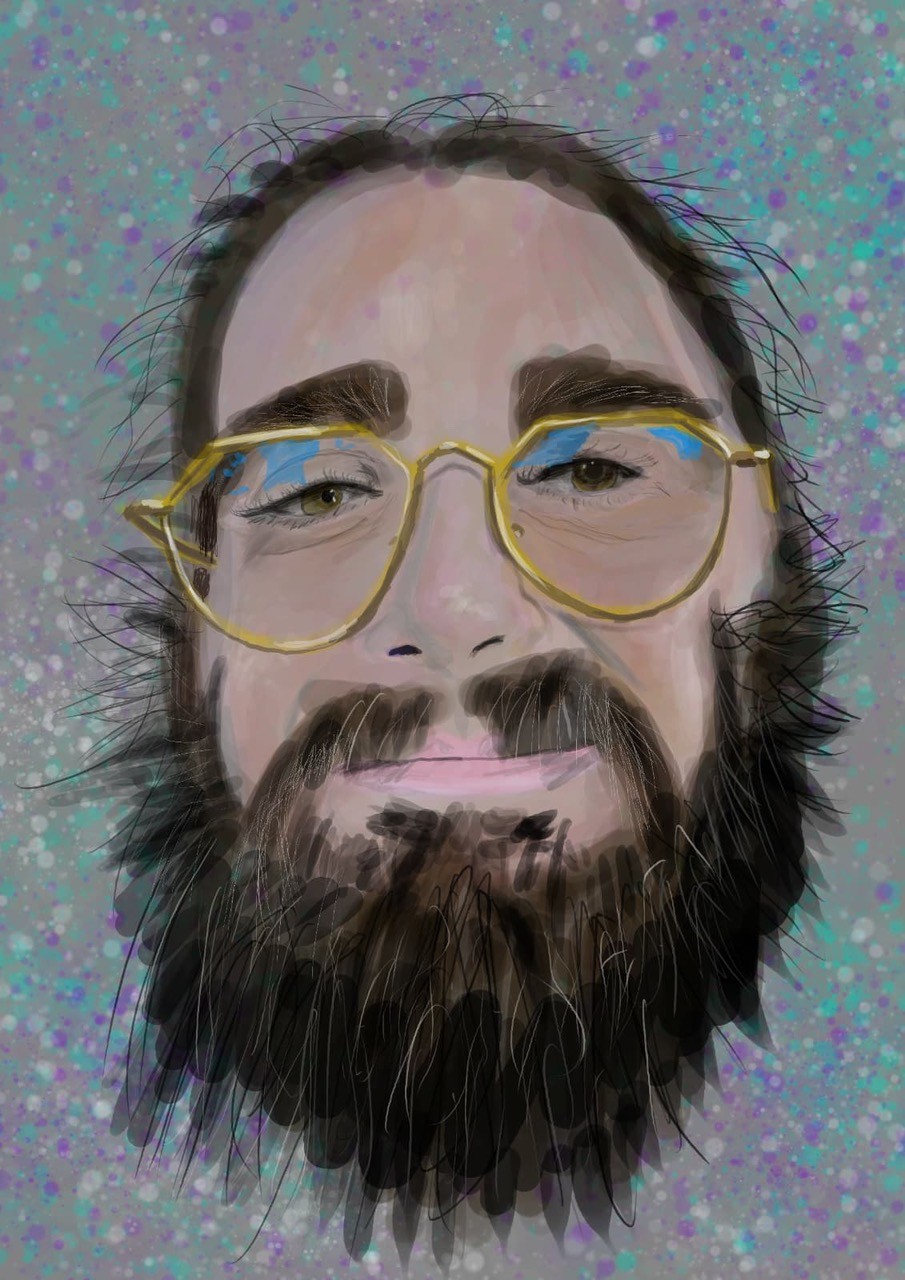
Ben is a writer and artist born and raised in Melbourne. Having been raised in an artistic family, Ben fell in love with storytelling from an early age, with his first major love in speculative fiction being the Deltora Quest books by Emily Rodda. He’s worked as a copy and content writer for numerous companies in the last decade, and is currently working on three novels, and a poetry collection. His artistic endeavours focus on digital media, specialising in digital painting, and illustration using Krita. Ben has been diagnosed with ADHD and Autism, and cares for his disabled wife, and mother.
Looking for a disability-led, radically inclusive community where you can connect with others?Join Belong, our free group with both in-person and online events.
Want to write for the Beyond Blog? Email finnley@drc.org.au!