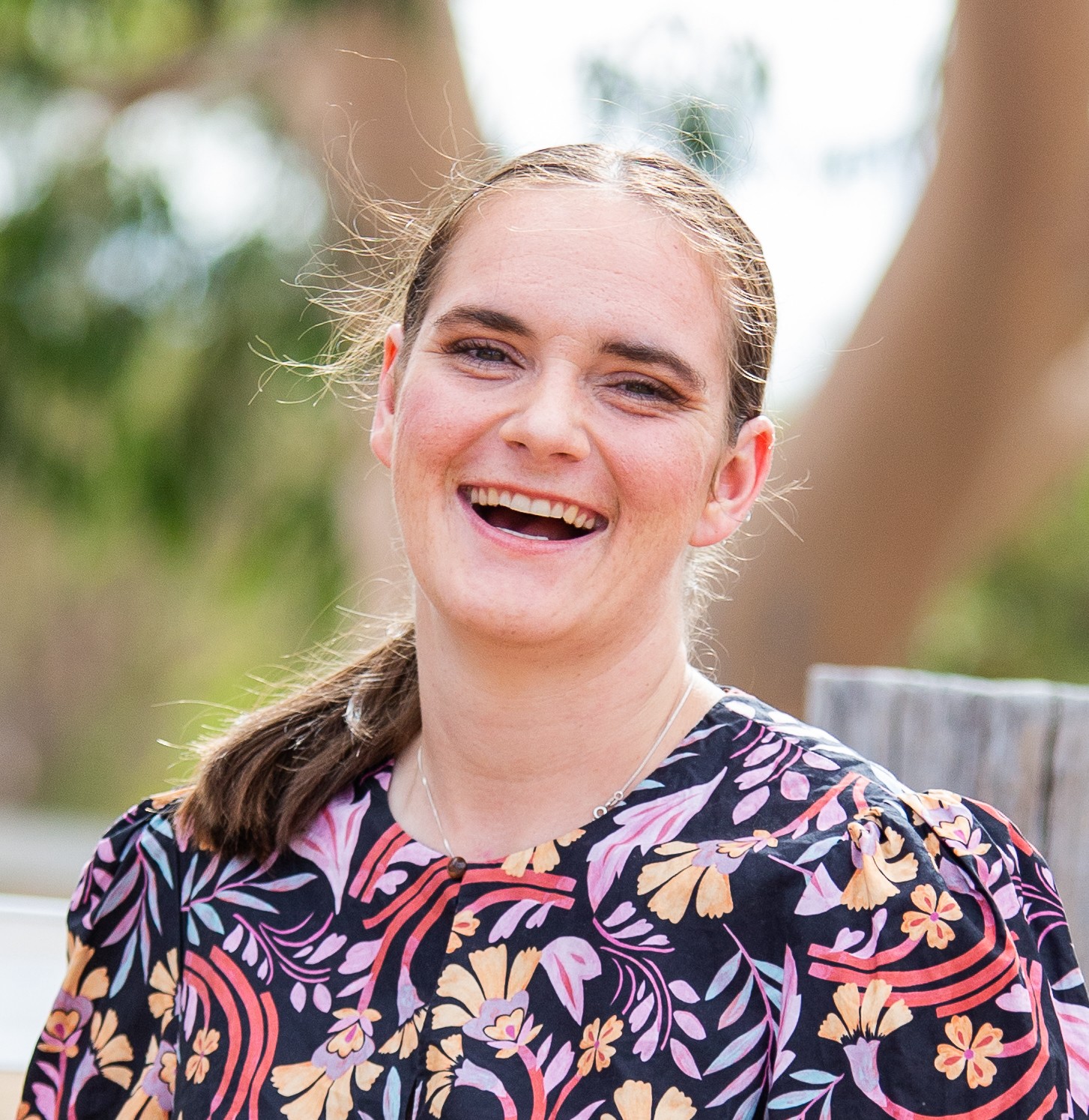
Disability rights campaigner and Para athlete Stella Barton shares her story of communication assistive technology.
It’s 2003 and I am three years old. I have a physical disability, so I spend a lot of my time in front of the TV watching ABC Kids because I cannot run around with other children my own age.
My mother is only a few metres away in the kitchen. I have not yet spoken anything that my parents have understood or that has led them to believe I am intelligent.
As I watch, there is the usual rotation of children’s programs that fill the afternoon like Bob the Builder, The Wiggles and Angelina Ballerina, to name a few. Thomas the Tank Engine comes on.
“Ugh, I really hate this show,” I think to myself.
I look over at Mum in the kitchen and I need her to know how bored I am. I want to try to say something. So, I start really slowly.
“I… hate… Thomas… the… Tank… Engine!”
Hearing my words, Mum looks at me curiously, before rushing over excitedly. It’s just dawning on her that I have a mind that understands what’s going on around me.
The right to communicate
The right and the opportunity to communicate has always been very important to me personally—particularly as someone whose speech can be hard to understand, thanks to cerebral palsy, which affects the way I use my mouth. As a result, I often use written communication, with the help of technology.
I was around nine years old when I got my first electronic communication device. With it, I was able to say things quicker and easier than before.
I remember taking it to school and being able to say things to my teachers and friends, and be able to be understood. It was an amazing feeling. And as a result, my teachers began to realise how smart and engaged with learning I was.
When the iPad first came out in 2010, the way I communicate was dramatically improved again. It also momentarily made me the most popular girl in school as the first person to own this new ground breaking piece of technology.
The iPad was much less bulky and easier to carry around, and by the time I got to high school, I was able to use my iPad to give class presentations and other public speaking tasks. I remember participating in the debating events, which was something I would have steered clear of before I had access to my iPad. It really has made such a huge difference in my life.
But most people take communication for granted
The ability of humans to communicate with one another is a vital part of being alive.
And not being able to communicate can be extremely frustrating and exhausting when people don’t listen to us.
Most people take the ability to communicate by talking for granted, but communication comes in many different forms. Like spoken or verbal communication, written communication, and sign language, to name a few. And there are many reasons why someone might need alternative forms of communication. I have friends who are autistic and cannot speak, but can type what they want to say. Text-to-speech can also be a great way we can have a voice and be heard. For Deaf people, sign language might be used to enhance speech, or as an alternative to spoken language. My grandmother was a teacher for Deaf people, so she taught me how to sign as a child. At home, my parents and I still sign when they don’t understand me, and it’s a very handy tool. Although my cerebral palsy also affects my hands, so while signing can be useful, it’s not a complete answer for me.
Disabled people use a variety of different communication forms every day—and it’s important people don’t underestimate someone, just because of the way they communicate.
Where my communication assistive technology has taken me
My communication assistive technology has made a huge difference in my life. I’ve even been on the radio, talking about disability rights and other disability-related topics. Doing community radio programs with my iPad has been a really fun thing to do. I usually prepare a segment in advance and I can play it, as well as being able to type and speak as the conversation is unfolding. A few years ago, I even used to present a regular weekly community radio show with my friend Rosie, who had a lovely way of gently repeating the things I said for clarity and for our audience to tune into my speech without getting frustrated. Not everyone has this skill, but when they do, they make a wonderful communication ally that really helps me to be a part of any conversation.
While I still do use my iPad to communicate sometimes, these days my main way of communicating on a day-to-day basis is through my speech. With people who know me well it is an easy and quick way to communicate but with strangers it can take longer. Some people are less patient than others and they don’t listen to my speech which can be very frustrating.
Seeing assistive communication technology represented in the media
Last year I saw a film called Out of My Mind, which is about a young girl, Melody Brooks, who has cerebral palsy. The story tells of the transformation in Melody’s life when she gets her first communication device, and is able to express her thoughts and needs for the first time.
I could really relate to the vast opportunities the communication device opens up for her. It shows how important it is to be able to communicate and have a voice. What is also exciting for me is that finally we are starting to tell stories about people like me, and storytelling is a great way to foster greater understanding and inclusion, and smash stigma and negative assumptions. As my late friend Dr Rosemary Crossley says, ‘it’s important to presume competence when you meet someone whose speech might be difficult to understand’.
It is slowly becoming more of a mainstream discussion topic, but as a society we need to be addressing the societal barriers which prevent disabled people from being able to communicate.
From the moment that I expressed my hatred of Thomas the Tank Engine, I have never been underestimated and my intellectual capabilities have always been encouraged by my family.
Stella Barton (she/her) has a Bachelor of Arts (Sociology) from Swinburne University. In 2024 she competed in the Paris Paralympics in Para Dressage and finished 7th from a field if 22 competitors. Stella is dedicated to working to create equal opportunities for disabled people, and is an active participant on various advocacy committees. She is eager to leverage her skills and lived experience to promote accessibility, engender inclusivity & raise public awareness to create meaningful change in the community. Stella also understands the power of the arts to develop community and communicate ideas and she enjoys painting, drawing, as her forms of creative expression. She has been actively involved in campaigns for greater access to public transport especially in her local community.
Have a blog idea and want to share it? Reach out to Zoe@DRC.org.au
We’d love to here from you!
While you’re here, why not check out our free disability community, Belong?